Capitol Visitor Center
The Lost SymbolThe Capitol Visitor Center is both a public entrance to the United States Capitol and a crucial passage between its visible civic spaces and its concealed subterranean routes. During the night of the crisis, its broad marble floors and large atrium become a stage for security failures, while a masked service door opens onto a tunnel that allows Robert Langdon and Warren Bellamy to escape.
Public Space and Routine
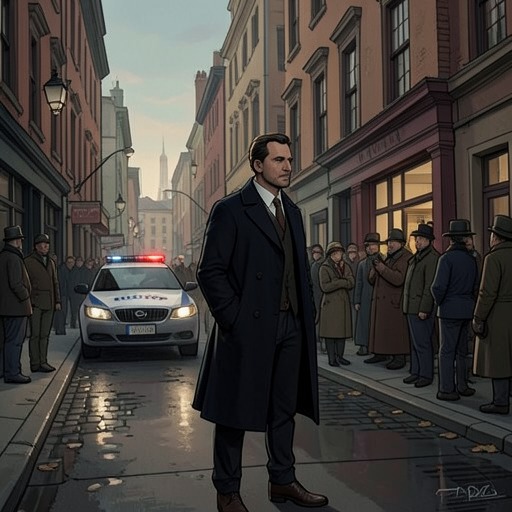
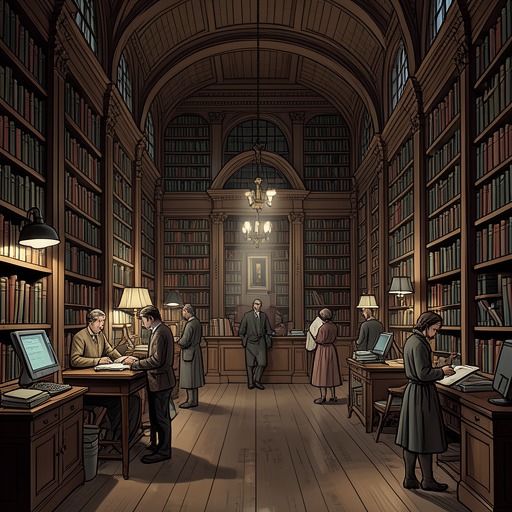
The Capitol Visitor Center is described as a wide-open visitor space situated three stories above the United States Capitol’s subbasement. Its expansive marble floors lead toward an escalator, while its main entry doors are locked each night as part of the regular closing routine. The setting’s openness makes the later appearance of an unannounced visitor conspicuous: after locking the entrance, security guard Nuñez is crossing the marble interior toward the escalator when pounding at the glass draws him back.
The center is also part of Robert Langdon’s route into the building earlier that evening. When Langdon later passes through it with Bellamy, Nuñez recognizes him as the visitor who had come through the X-ray machine. That recognition links the center’s ordinary screening function to the larger security breakdown: the public entrance records a familiar face, but it cannot prevent a dangerous intruder from moving through the Capitol or stop an insider from helping Langdon escape.
Bellamy’s Arrival
The person pounding on the locked entrance is an elderly African American man, immaculately dressed in a blue suit. Nuñez initially refuses to let him in, pointing to his watch; when the man steps into the light, however, Nuñez recognizes Warren Bellamy, the Architect of the Capitol, and quickly unlocks the door. Bellamy’s arrival turns the center’s routine boundary into a point of privileged access. He asks about the incident, learns that Chief Trent Anderson and Inoue Sato are downstairs, and heads toward the escalators to find them.
Bellamy asks Nuñez not to announce his arrival. The guard hesitates, aware that Anderson is his superior, but Bellamy reminds him that he employs the chief. The exchange establishes the competing authorities that shape the center’s role: Nuñez is responsible for security, Anderson commands the police response, and Bellamy’s institutional position gives him another kind of power. His quiet entrance also foreshadows the later, more consequential use he makes of the building’s access points.
Hidden Exit and Escape
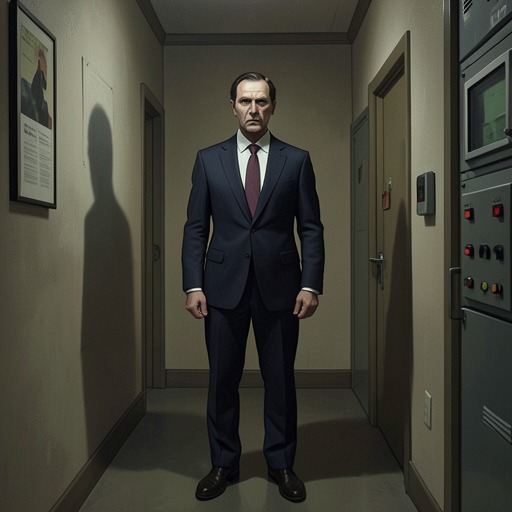
Later, Bellamy leads Langdon through the United States Capitol’s subterranean maze and back into the Capitol Visitor Center. They emerge from a utilitarian hallway into a plush movie theater, then leave through its main doors into the light of the large atrium. The route makes the visitor center feel less like a single public hall than a junction connecting rooms and corridors that serve different purposes. An officer is present in the center, but Bellamy identifies him as Nuñez and orders him to follow without speaking.
At the southeast corner, the men reach a small foyer and heavy doors blocked by orange pylons. Masking tape across the doors appears to keep dust from construction out of the visitor center. Bellamy peels it away, unlocks the dead bolt with a key from his ring, and opens a steel door into a modern corridor under construction. He tells Nuñez that Anderson may be injured, then instructs him to lock the door, replace the tape, keep the key, and say nothing—not even to the chief. Nuñez follows those directions, securing the door behind Bellamy and Langdon as they enter the corridor.
The concealment is temporary. Back at police headquarters, Nuñez tells Anderson that Bellamy and Langdon escaped and hands over the key, identifying it as the one to the new tunnel under Independence Avenue. Nuñez initially tries to protect his chief by presenting the key as something he found, but Sato reveals that surveillance footage has shown him assisting the escape. The hidden route thus connects the visitor center’s construction area to a means of leaving the building, while the center’s cameras and the recovered key make that escape traceable.
Narrative Significance
The Capitol Visitor Center concentrates the story’s tension between public visibility and concealed access. Its entrance is screened and locked; its halls and theater seem open and navigable; behind a construction-sealed door, a tunnel offers a route outside the ordinary flow of visitors and guards. Bellamy’s knowledge of the building turns that hidden infrastructure into a practical means of rescue, while Nuñez’s divided loyalties make the escape possible at the human level.
The center’s spaces also give the pursuit a clear physical shape. Langdon enters through a monitored public threshold, crosses the broad visitor area under the gaze of a recognizable guard, and leaves through a door disguised as a construction barrier. Once the escape is exposed, video surveillance and the tunnel key reverse the apparent advantage of secrecy. The center is therefore not merely a passage through the Capitol: it is the point where public security, institutional authority, private knowledge, and hidden architecture meet.